 hafiz-rahman
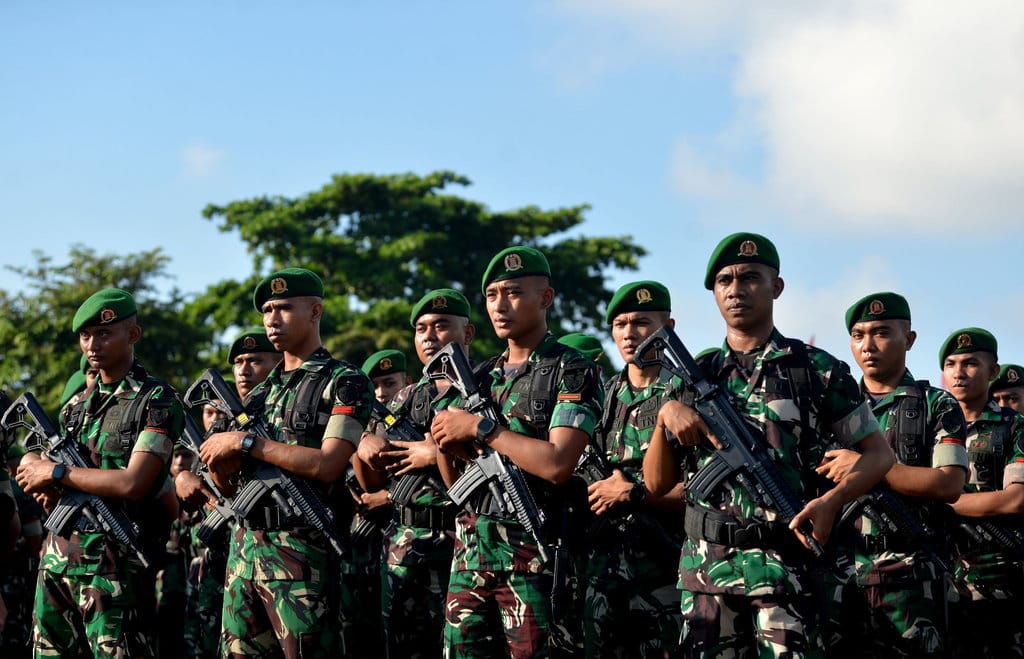
Usulipers Effectiveness inserting personnel of TNI and Polri into the registration stage of social assistance distribution has resurfaced in public discussion. The idea, which has circulated in several provincial scopes, argues that military and police officers possess the field network, discipline, and territorial knowledge needed to accelerate beneficiary data verification, particularly in villages that have never been touched by a complete civil administration apparatus.
However, the proposal did not emerge without resistance. A number of observers question the placement, not on grounds of competence, but on the grounds of institutional boundaries. The core objection centers on how far a uniformed apparatus whose main duty is defense and law enforcement may go before public service functions begin to dilute the very professionalism being invoked as justification.
Argumen yang Mendukung Pelibatan
Supporters of the scheme point to distribution data that show persistent coverage gaps. In many districts, the ratio of social assistance applicants to administrative village staff is imbalanced, resulting in long queues, incomplete data, and households that repeatedly miss verification schedules. TNI andifices operate in territorial units that overlap with civilian administrative villages, a structure that theoretically allows faster mapping of residents who are eligible but not yet recorded.
A second argument concerns data integrity. Advocates maintain that officers trained in disciplined record-keeping and chain of command can reduce the occurrence of fictitious households, duplicate entries, and beneficiary names derived from documents that were never validated by a civil registrar. From this perspective, uniformed personnel are seen not as a substitute for the civil service, but as a temporary bridge where civil apparatus fails to reach.
A third argument is tied to public trust. In several areas, residents reportedly respond more readily to data collection conducted by personnel wearing uniforms and carrying clear authority than to ad hoc enumerators arriving without any verifiable mandate. Supporters consider this a pragmatic calculation rather than a philosophical one.
Sisi Kontra: Batas Institutional dan Risiko Profesionalisme
Opponents respond that welfare administration is not a military function. The distribution of social assistance rests on a legal basis anchored in civilian bureaucracy, and transferring its execution to armed institutions creates a precedent that is difficult to reverse once adopted. They emphasize that the duties of TNI and Polri, set out in their respective institutional laws, do not include the authority to determine eligibility for civilian social programs.
A sharper objection touches on role conflict. Officers tasked with verifying household data may later be placed in positions that influence which households receive aid, a decision that carries both economic value and political sensitivity. Even without formal misconduct, the mere appearance of armed authority behind a beneficiary decision can alter how residents respond. Some residents, according to this view, may feel compelled to provide data that is inaccurate in order to avoid friction, producing a data set that looks complete but is not trustworthy.
The professionalism concern is also expressed internally. Former officials and retired officers argue that routine involvement in administrative distribution erodes the public image of the uniform, which historically draws strength from distance from partisan and mundane political affairs. The counter-claim is that a temporary assignment, if clearly bounded and audited, would not have that effect.
Pertanyaan yang Belum Terjawab
Several technical questions remain open in the debate. First, there is no clarity on whether the scheme requires a formal regulation, or whether it can operate on the basis of coordination agreements between districts and military units. Second, the question of funding and administrative cost has not been fully articulated. Third, the accountability line is unclear: if a beneficiary list produced through this channel turns out to contain errors, which institution bears responsibility.
Observers also note that the debate is frequently framed in binary terms, either full military involvement or total civilian exclusion. Few parties have proposed intermediate models, such as military personnel delivering technical assistance in data mapping while civil officials retain full authority over eligibility determination and disbursement.
Implikasi Kebijakan
Should the government decide to pursue the idea, the verification of its benefits will depend on three measurable indicators: the accuracy of the resulting beneficiary data, the speed reduction in verification waiting time, and the absence of complaints regarding pressure or coercion during the collection phase. Without those indicators, the debate will remain a rhetorical exchange between supporters who cite distribution figures and critics who cite institutional law.
What can be stated with certainty is that the proposal touches a structural issue rather than a mere operational one. Placing uniformed personnel in a civilian welfare apparatus is not a neutral administrative decision, but a redistribution of authority between institutions. Any step in that direction, supporters and opponents agree, requires written rules, clear limits of authority, and an audit mechanism established before, not after, the first beneficiary list is finalized.








:strip_icc():format(webp)/kly-media-production/medias/8263843/original/065734300_1782021578-Tugas__38_.jpg)


Comments (0)