 ramadiansyah
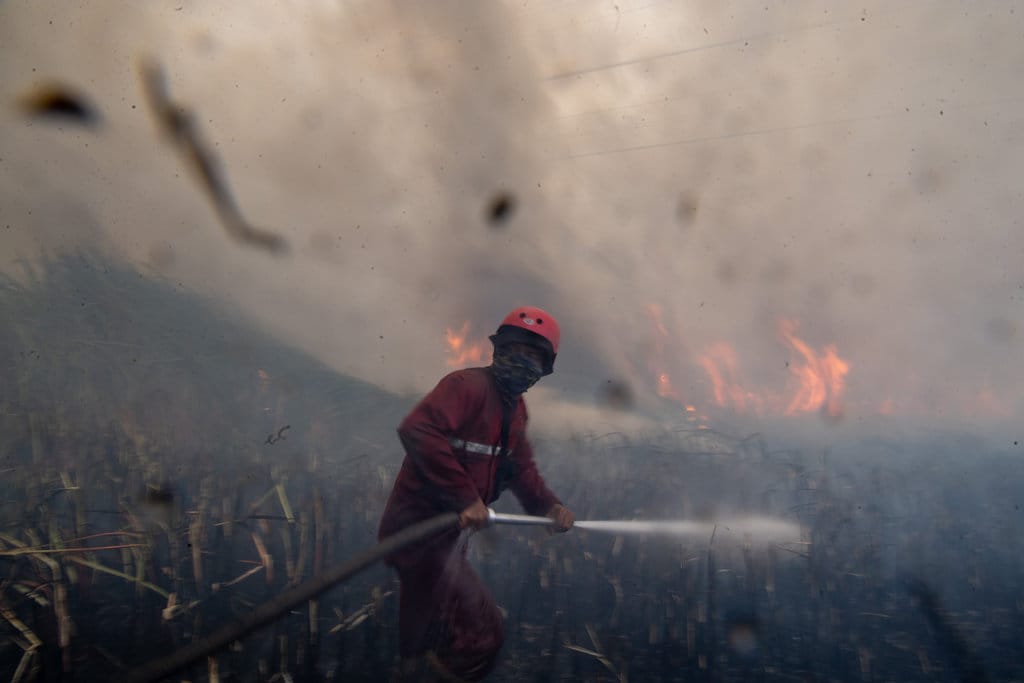
Pekan ini,.AccountERNIO一段 genuinely tagih: kalimat yang sama bergema diousands akun media sosial —.Required,Hdclok.If the haze doesn't lift, resignation.This is not a solitary complaint or a small group of loud accounts.It is a coordinated echo across thousands of users who keep writing in the same key:T electricianama自私.SayaGUIDANCEkan banyak hal, tapi ini yang paling saya、体重kan.Padahal duringodus.The public's frustration is concentrated in one figure.The Governor of South Sumatra,Herman Deru,has become the main address of the anger. And the reason is simple: the haze over the province has not dissipated.
The issue is not just environmental. It is about accountability, health, education, and travel.Tens of thousands of households live under a sky that filters sunlight into a dirty orange.Hospitals in several districts report a surge in respiratory complaints. Flights at Sultan Mahmud Badaruddin II Airport have been disrupted. School activities in affected areas are being adjusted.But the most acute blow falls on those who have nothing to lose — small farmers whose land borders the burning fields, drivers on the highways, children who breathe the air every morning.
From Complaint to Demand
Initially, the tone of the posts was a question: when will the smoke stop? When will the rain finally come? When will the wind turn? But over the past few days, the phrasing has changed.The question has hardened into a demand. And the demand carries an ultimatum: resign within a week if the thick haze caused by peatland fires — locally known as karhutla — does not immediately subside.
What makes this movement distinctive is not its anger but its organization. The calls to step down are not scattered. They are scheduled.Copy-paste messages circulate in comment threads. Petition-style posts are shared in groups. Demands to step down are repeated with hashtags. Many of these accounts are not verified and their identities cannot be confirmed. But the scale is difficult to ignore, and so is the uniformity of the wording.
Understanding the Season Behind the Crisis
Karhutla has its own pattern in South Sumatra. Peatlands, once saturated with water, become highly combustible once exposed to dry conditions. A single spark or a deliberate ignition is enough.The resulting fire does not behave like an ordinary forest fire. It burns beneath the surface, underground, feeding on the organic layers of the peat soil for weeks, sometimes months. Consequently, the smoke produced is dense, persistent, and capable of traveling hundreds of kilometers across provinces and even across national borders.
This means that the flames may appear distant, but the impact is close. The smoke crosses administrative boundaries without asking permission.It settles over settlements, hangs in the atmosphere, and degrades air quality far beyond the areas where the burning is actually taking place.This is precisely why the public's frustration rarely targets those who set the fires directly. The frustration is directed at the officials deemed responsible for handling the consequences — including the Governor.
Handling, Not Merely Announcing
Throughout the crisis, the assessment that has emerged from the public is not that the government has done nothing. It is that what has been done has not been felt. The response is considered slow, insufficient, and difficult to feel in the daily experience of breathing polluted air.
The most frequent criticism is about the approach to the land itself: an approach that is considered to treat the fire as a seasonal event rather than a structural problem. When the smoke appears every year and the same regions become hotspots, the question that follows is whether the same approach will be repeated. And if so, with what results? This is the core of public distrust: the belief that the same pattern will repeat, and that the fire will return after the rains come.
The Meaning of the One-Week Deadline
The ultimatum of a week carries a strong psychological dimension. It functions as a message: do not treat this as something that can be postponed until after a routine meeting or a ceremonial statement. Do not rely on the assumption that smoke will eventually fade on its own while waiting for the season to pass.
At the same time, this demand has a side effect worth noting: it shifts public discourse from the environment to power. The focus is no longer only on where the fires are burning, which land is affected, and how many hectares have been burned. It moves to a single question: who is willing to accept responsibility?
What Remains Unanswered
Several questions accompany the wave of demands and have not received a clear answer from any party. How many points have the hotspot areas in South Sumatra? How many hectares have been burned? What is the readiness of the firefighting forces on the ground? Why are some fires in peatland areas still difficult to extinguish? Is the one-week deadline based on any official data, or is it born purely out of collective exhaustion?
Until these questions are answered with figures and timelines, the call for resignation is likely to keep echoing. Because the issue is not merely a political demand. It is a public health demand. And in the middle of the dry season, with haze still covering the horizon, health is something that cannot be postponed.








:strip_icc():format(webp)/kly-media-production/medias/8263843/original/065734300_1782021578-Tugas__38_.jpg)


Comments (0)