 khrisna-pertiwi
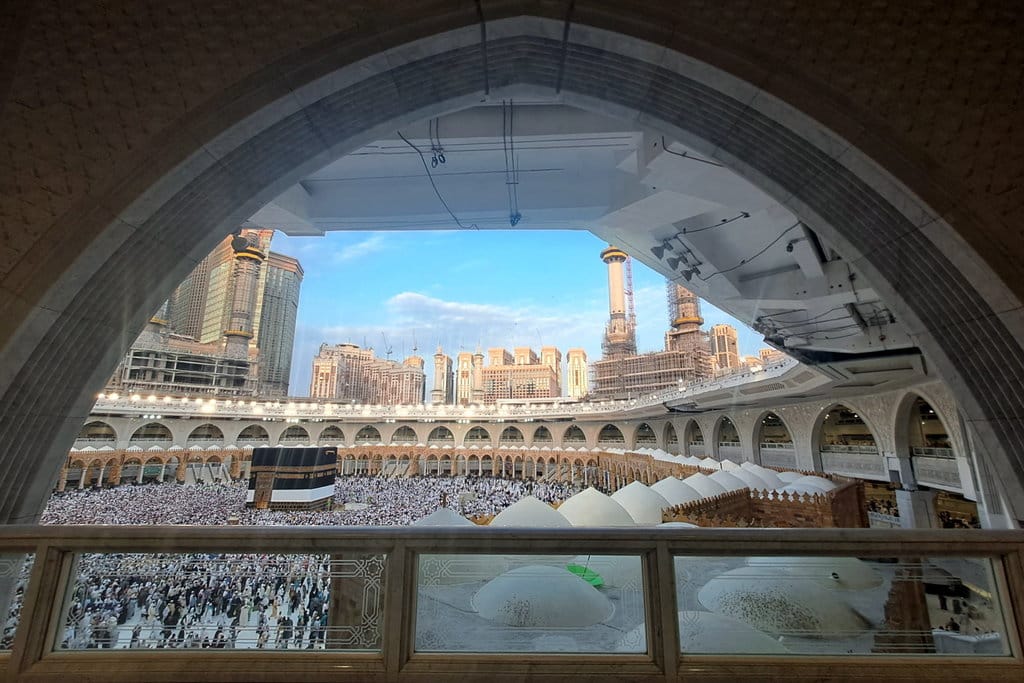
Pemerintah_csrr took a decisive stance against alleged practices of price manipulation and cartelization in the Hajj and Umrah services. President Prabowo Subianto issued a direct instruction to clean up practices that have long been considered a structural problem in the pilgrimage industry, particularly in the segments of airline seats, hotel capacity, and religious travel packages.
The order, which was delivered in a cabinet-style meeting, signals a shift in approach. Instead of treating the issue as a matter of internal industry reform, the government is positioning it as an economic crime that requires law enforcement intervention. According to the outline of the instruction, the cleaning-up effort will cover three main clusters: airline seat procurement for pilgrims, hotel room allocation in the holy land, and the Umrah service packages sold by travel agencies to congregants.
In practice, the order opens the door for stronger intervention by several institutions at once. The Ministry of Religious Affairs, which holds the main authority over Hajj and Umrah administration, is expected to tighten operational standards, while law enforcement agencies need to examine whether there are indications of price fixing, abuse of dominant position, or unlawful agreements in the procurement process.
Three Pillars Targeted
The three clusters mentioned above are not new complaints. Pilgrims have long reported that airline seat prices for the Hajj season experience drastic spikes compared to normal commercial flights. Hotels in Mecca and Medina are also known to be fully booked months in advance, with room allocations often tied to unofficial channels. The third cluster, Umrah packages, is widely considered the most difficult to monitor because prices change according to season, departure city, and hotel class.
The government views these three areas as a single system rather than separate problems. Without intervention, the cost of Hajj and Umrah will continue to rise and will be felt directly by congregations across the country, including those from lower-income communities and elderly pilgrims who rely heavily on officially organized Hajj travel.
Komnas Haji Pushes for KPPU Involvement
The Hajj Monitoring Commission encouraged the government to involve the Business Competition Supervisory Commission, or KPPU, in the clean-up process. The Commission argued that many of the practices suspected of occurring in the pilgrimage industry fall within the scope of competition law, particularly those related to price agreements, market division, and restrictive practices.
Inviting KPPU to join is seen as a way to ensure that the handling of the case does not stop at administrative sanctions. Without involvement of an independent competition watchdog, there is a risk that the clean-up will only target small-scale violations, while the bigger actors in the industry escape scrutiny. The Commission also reminded that the process must proceed through formal legal procedures so that the findings can be accountably examined.
AMPHURI: Fair Enforcement, Not Just Punishment
On the same issue, the Association of Indonesian Hajj and Umrah Travel Agencies, or AMPHURI, reminded the government that law enforcement must be carried out fairly. The association emphasized that the clean-up should not be used as a means of selective action against certain business actors.
From AMPHURI's perspective, the industry has a legitimate side as well. Most agencies operate with official permits and are bound by service quality standards and administrative rules. If enforcement is uneven, the association warns, it will damage the credibility of licensed agencies and create uncertainty for congregations who have already made payments and booked their journeys. A fair process, according to the association, means every actor receives the same treatment, including those who are found innocent.
Challenges Ahead
The main challenge lies in the transparency of data. Seat allocation data, hotel room availability, and package pricing are distributed across multiple institutions and are not always open for public examination. Without accurate data, it will be difficult to distinguish between normal price adjustments due to seasonal factors and practices that deliberately inflate prices through collusion.
Another challenge is coordination across agencies. Handling cartel cases requires cooperation among the Ministry of Religious Affairs, the Ministry of Transportation for airline seat issues, KPPU for competition aspects, and law enforcement agencies for criminal elements. Fragmented authority often slows down the process, and the risk is that the clean-up will end before reaching the network structure that is suspected of benefiting from the practice.
What to Watch Next
Several indicators will show whether the order will produce real results. The first is whether KPPU receives a formal mandate and begins a preliminary examination. The second is whether sanctions are imposed on any actors found to have engaged in price agreements, and whether the sanctions are announced publicly. The third is whether transparency mechanisms are opened to the public, especially regarding airline seat prices and hotel allocation data.
For congregations, the most important reference is the change in prices that they actually have to pay. If the clean-up is successful, the cost of Hajj and Umrah should be more reasonable, and the distribution of quotas and room allocations should be easier to verify. The government has set the direction; the hard part now is execution, evidence gathering, and consistent enforcement.








:strip_icc():format(webp)/kly-media-production/medias/8263843/original/065734300_1782021578-Tugas__38_.jpg)


Comments (0)