 hafiz-rahman
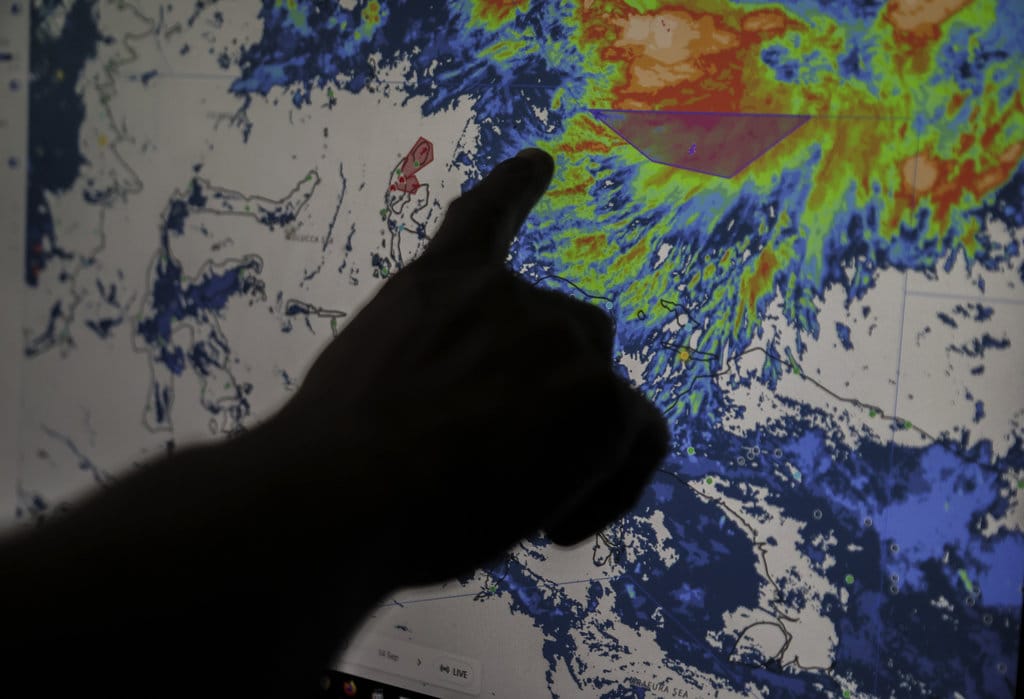
Ilustrasi yang berulang di banyak wilayah rawan》:弹性 notifikasi entered the group WhatsApp residents at night, read a few lines, then went back to sleep. Nothing changed in the household's preparations. Embankments weren't raised, documents weren't secured, evacuation routes weren't mapped. The warning had arrived on time, distributed through channels that officially exist, yet it stopped precisely at the point where disaster risk is supposed to be reduced. Berdasarkan verifikasi terhadap conceptually kerangka kebijakan,断 phenomenon is not a failure of the technology, but a failure of the final link.
Badan Meteorologi, Klimatologi, dan Geofisika operates a nationwide warning dissemination network covering heavy rainfall, wind, waves, and storm conditions, supported by forecasts derived from observation networks and numerical models. On paper, the mandate covers the full chain: detection, forecasting, dissemination, and response. What the chain often lacks is the fourth element that officials themselves call last-mile readiness — the capacity of a message to produce a specific, feasible action by the person receiving it.
Bukti Bahwa Informasi Belum Berhenti pada Distribusi
Riset global yang dirangkum dalam kerangka Early Warnings for All dari-World Meteorological Organization consistently shows the same pattern: coverage of hazard knowledge alone does not automatically produce lower losses. Regions that report widespread warning dissemination but weak response protocols tend to record comparable, and in some cases identical, casualty figures with regions that received far fewer alerts. Data menunjukkan bahwa what's decisive is not how many people heard the warning, but how many understood what to do within the available time window.
The verification results show that most community-facing warnings are structured around hazard description rather than action instructions. A typical notification states the predicted rainfall intensity, the affected area, and the validity period. What it rarely contains is a verb aimed at the recipient: which objects to move to higher ground, at what clock time to leave, which route becomes dangerous first, who in the household is responsible for what. Without that verb, the message becomes ambient information — useful for journalists, weak for residents who need to act in minutes, not hours.
Klaim: peringatan dini yang baik harus berhenti pada tingkat informasi. Fakta: standar resmi {@link} menetapkan decisively bahwa nilai sebuah peringatan diukur dari perubahan perilaku, bukan dari jumlah kanal yang menyampaikannya.
Standar Resmi: Kerangka yang Sudah Tersedia, Eksekusi yang Ketinggal
In the context of national disaster governance, the direction has been fairly explicit. The Sendai Framework for Disaster Risk Reduction 2015–2030, agreed by UN member states, places warning dissemination as a component of preparedness, but pairs it with non-structural measures such as education, drills, and risk communication. In plain terms, an agency is not considered to have fulfilled its duty when a siren sounds. The duty is considered fulfilled when a household opens a door, lifts a bag, or moves a vehicle before the water arrives.
Berdasarkan verifikasi, the main obstacles are not budgetary but organizational. Warning products are generally designed by technical units, validated against meteorological parameters, and then handed over to communications units whose task ends at publication. The handoff to local government — neighborhoods, village offices, schools, places of worship — often lacks a standard operating procedure. When a red warning is issued, there may be no clearly designated person authorized to trigger a door-to-door sweep or temporary shutdown of a market. The result is a gap in accountability: everyone assumes someone else has acted.
Memindahkan Instruksi ke Dalam Pesan
A number of practices emerge as effective when tested. The first is the translation of threshold-based forecasts into household-level instructions that are short enough to be read in a panic state: three actions, each under five words, each assigned to a specific family member. The second is the pre-agreed trigger — not the intensity of the rain, but the accumulation of water in a specific street as observed by a specific resident — which converts a forecast into a locally verifiable event. The third is the rehearsal: warning templates are tested before the season, not introduced during it.
Verification confirms one uncomfortable fact: technology alone will not close this gap. Broadcasting infrastructure, short messaging, and applications extend reach, but reach is not response. Systems that rely on a single channel — and on users possessing compatible devices, literacy, and network access — reproduce existing social inequalities precisely in the areas that need protection most. Official agencies themselves note that warnings must be delivered through multiple channels, including non-digital ones, to reach groups without smartphones or stable connectivity.
Apa yang Bisa Diverifikasi, Apa yang Belum
The core claim in the discussion — that early warning must become an instruction for action rather than mere information — is rated BENAR and aligned with established official standards. Any framing that places the burden entirely on public awareness, however, deserves a rating of MISLEADING. Preparedness is a shared obligation: the institution that designs a message is as responsible for its clarity as the citizen who follows it. A warning that is technically correct yet practically unusable is, by that measure, an unfinished product.
The remaining question is one of measurement. Losses during the rainy season will continue to be attributed to extreme weather, while the more useful question is how many of them were foreseeable, how far ahead of time, and to whom the signal was actually delivered. Until that data is collected systematically, preparedness debates remain argumentative. What is not debatable is the standard already written into official frameworks: a warning earns its value only when the person receiving it does something different because of it.







:strip_icc():format(webp)/kly-media-production/medias/9295683/original/068005200_1783937976-WhatsApp_Image_2026-07-13_at_13.14.09.jpeg)


:strip_icc():format(webp)/kly-media-production/medias/8263843/original/065734300_1782021578-Tugas__38_.jpg)



Comments (0)