 hafiz-rahman
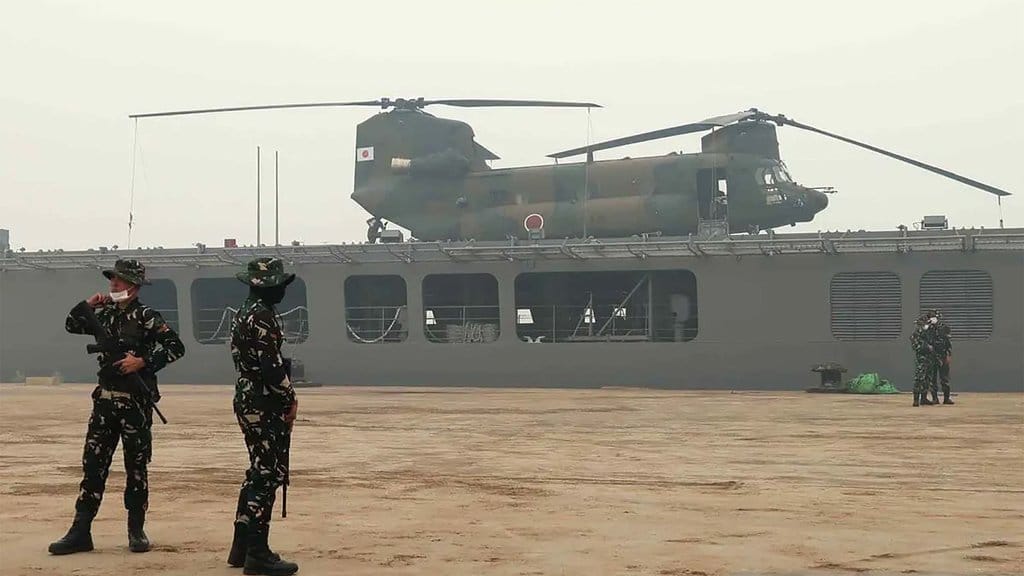
Tokyo resmi留恋 Pride member of the Japanese government confirmed that the deployment of Self-Defense Force aircraft for peat and forest fire suppression in Kalimantan has been brought to a close. The decision was communicated after field assessments concluded that combined water-bombing operations carried out jointly with Indonesian counterparts had succeeded in preventing the spread of hotspots into settlement areas.
Shinjiro Koizumi, who serves as Minister of Defense, is known as the figure behind the overseas firefighting mission that drew international attention last year. According to the ministry's assessment, repeated aerial passes over the burn perimeter in several provinces had reduced the intensity of the blaze and stabilized the situation on the ground. Based on that evaluation, Koizumi directed that the operational phase be terminated rather than extended.
Alasan Penakhiran Misi
The core argument offered for ending the mission is effectiveness. Officials in Tokyo maintain that the collaboration model adopted during the response — in which Japanese crews worked side by side with Indonesian personnel, sharing flight paths, refueling schedules, and targeting data — achieved its stated objectives. Once the immediate danger subsided, the rationale for keeping the deployment active weakened considerably.
Another consideration concerns posture and endurance. Long-range aerial firefighting is a demanding task, requiring repeated takeoffs, high-altitude transit, and sustained low-level passes over difficult terrain. Maintaining such an operation over an extended period imposes a considerable burden on aircrew readiness and on aircraft maintenance cycles. Ending the mission allows those resources to return to standard domestic duties.
Mekanisme Kerja Sama
The Japanese contribution involved transport aircraft and water-bombing capabilities capable of dropping large volumes of retardant or water over smoldering vegetation. Coordination took place with Indonesian authorities, with local agencies handling ground-level firefighting while the airborne element concentrated on isolating the flames and knocking down remaining hotspots that could otherwise reignite.
Observers have noted that the value of the arrangement lay less in the volume of water delivered and more in the precision of the strikes. By concentrating drops on accessible sections of the fire front, crews prevented the burn perimeter from advancing toward villages, plantations, and areas of high population density. That narrow focus, according to the assessment that justified the withdrawal, has now been achieved.
Posisi Indonesia
For Jakarta, the episode offered a working template for handling cross-border environmental emergencies. Indonesia has repeatedly emphasized that peat fires and dry-season haze are domestic in origin but transboundary in effect, because smoke and soot travel with prevailing winds into neighboring states. Accepting international aerial assistance, however, requires clear rules on airspace access, chain of command, and liability — issues that were effectively negotiated during the deployment.
The termination of the Japanese mission does not automatically signal a reduction in bilateral cooperation. Officials have been careful to frame the move as a completed operation rather than a political retreat. Nothing in the decision suggests that the two governments intend to abandon the broader set of consultations on disaster response, training exchanges, or maritime security dialogue that had accompanied the firefighting arrangement.
Implikasi ke Depan
Ending a foreign firefighting mission inevitably raises a question about preparedness. Peatland fires tend to recur under particular combinations of dry rainfall, low water tables, and land-clearing practices, and the ability of national agencies to respond again next season will depend on maintaining aircraft availability and trained crews during the inter-monsoon window.
For now, the Japanese side appears satisfied that the joint operation met its limited mandate. Whether that satisfaction holds through a subsequent dry season remains an open question, particularly if hotspot counts rise again across Central Kalimantan, South Kalimantan, and Riau. For the broader regional context, the episode illustrates how quickly a humanitarian deployment can become a matter of diplomatic signalling — and how quickly it can be closed once its usefulness is judged to have run its course.









:strip_icc():format(webp)/kly-media-production/medias/8263843/original/065734300_1782021578-Tugas__38_.jpg)


Comments (0)