 ramadiansyah
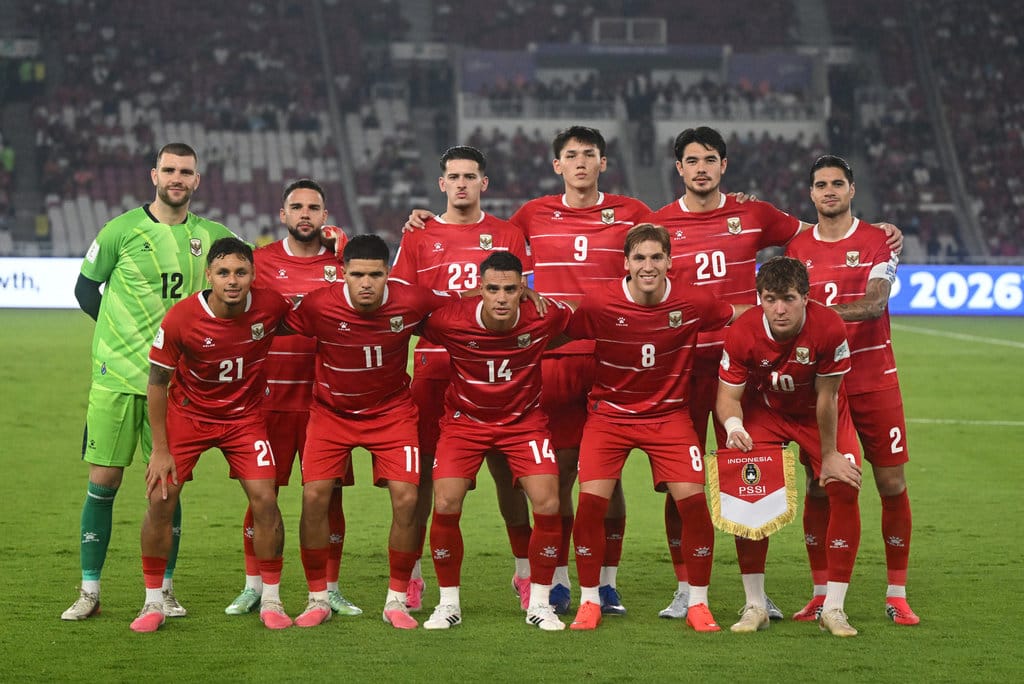
Persija Garuda embarked on their ASEAN Cup 2026 campaign with a defensive-first approach visible in the official team sheet released ahead of the Group A meeting against Malaysia. The match is scheduled for Monday, 28 September 2026, and the Indonesian delegation has confirmed a3-4-3 formation as the tactical foundation for the opening duel.
The choice of three central defenders signals a willingness to absorb pressure in the first hour of the contest. Malaysia, historically aggressive in wide areas and quick to exploit transitions, have built much of their attacking identity around wide forwards and overlapping full-backs. By adding a fifth defender in the middle of the pitch, the Indonesian coaching staff reduces the numerical space available for those combinations and forces Malaysia to attack through narrower channels.
Mengapa Formasi Tiga Belakang Dipilih
The 3-4-3 has gained traction in modern Southeast Asian football largely because it offers tactical compromise without sacrificing attacking width. In this shape, the two wing-backs effectively function as additional midfielders when the team possesses the ball, while dropping back alongside the centre-backs when defending. The result is a nominal five-man defensive line that transitions into a front five on the attack.
Against a side accustomed to territorial dominance, this structure allows Indonesia to contest second balls without exposing the space behind the midfield line. It also creates a direct route back to the shape used during previous editions of the regional tournament, where tight margins in the group phase frequently decided progression.
Distribusi Pemain per Baris
The official listing breaks down into a goalkeeper, three defenders, two wing-backs, two central midfielders and three attackers — eleven names in total. Each line carries a specific tactical responsibility rather than a purely nominal one.
Baris pertahanan: The three central defenders are expected to hold a shallow line, keeping roughly 15 to 20 metres from their own penalty area. Their task is not merely to clear the ball but to step forward and compress the pockets of space in front of Malaysia's attacking midfield. Comfort with the ball on the foot becomes a critical attribute, given that Malaysia frequently build their attacks from the back.
Sayap bertahan: The two wing-backs represent the most demanding roles in this system. They must cover the full length of the flank, from the defensive third to the final third, while simultaneously providing passing options during build-up play. Their stamina and decision-making will largely determine whether Indonesia can sustain the shape for the full ninety minutes.
Baris tengah: A midfield duo sits behind the attacking line, tasked with screening the defence and initiating forward movement. In possession, the pair should spread laterally to stretch Malaysia's compact block; out of possession, they are expected to drop into a flat four or a mid-block.
Baris serang: The front three give the system its width. A central striker anchors the attack, flanked by two attacking wingers who are permitted to drift inside when needed, creating overloads in the half-spaces. Rotation between these three positions will be key to avoiding predictability.
Implikasi untuk Debut Grup
Opening fixtures in continental tournaments often carry more weight than the scoreline suggests. A victory here would grant Indonesia a favourable baseline before subsequent group matches, while a defeat could force a substantial reshuffle of plans ahead of the decisive rounds. Selecting a back three rather than the more familiar four-man defence therefore carries symbolic value: it indicates that the technical staff entered the tournament with a specific identity rather than defaulting to convention.
Malaysia's preparation, meanwhile, is understood to revolve around pace and verticality — qualities that can trouble teams committing numbers forward. Indonesia's three-defensive structure directly addresses that threat, at the cost of surrendering some control of midfield territory.
Hal yang Perlu Dipantau saat Pertandingan
Several measurable indicators will tell whether the plan works. First, the number of clearances and recoveries in the middle third will show how effectively the midfield duo disrupts Malaysia's build-up. Second, the distance travelled by each wing-back will indicate whether the shape is being maintained or stretched over time. Third, the frequency of attacks launched through the flanks will reveal whether Malaysia have adapted to the narrow central channels.
The confirmed line-up provides a framework, not a guarantee. Adjustments during the interval — a shift to a back four, a change of pressing height, or a substitution of an attacking wing-back — remain within the tactical repertoire of any modern coaching setup.
The team sheet for Monday's fixture thus offers more than eleven names. It outlines a coherent tactical proposition: defend in numbers, contest centrally, and attack through width and rotation. Whether that proposition survives contact with Malaysia's approach will be determined on the pitch.







:strip_icc():format(webp)/kly-media-production/medias/8263843/original/065734300_1782021578-Tugas__38_.jpg)


Comments (0)