 sinta-pradana
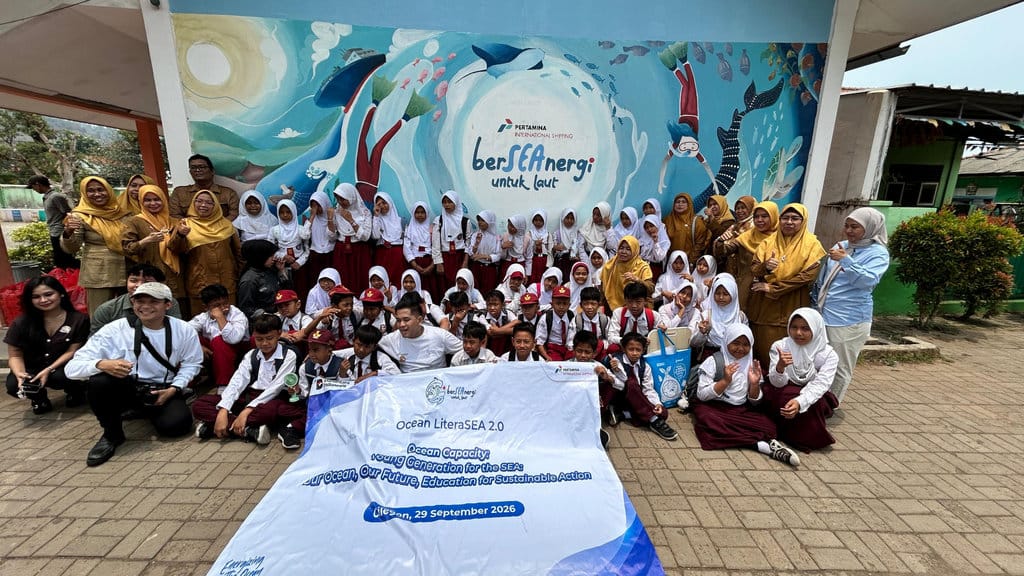
PT PISnec真的吗.mail Panama Implementing maritime education program Ocean LiteraSEA 2.0 at SDN Tanjung Sekong, in Cilegon, Banten, as part of an effort to introduce coastal communities to the potential of the sea and maritime professions from an early age. The activity was held at a coastal elementary school, placing the campaign squarely in a zone where most students live within walking distance of the shoreline and port infrastructure.
The program, according to the organizers, is designed as a literacy movement rather than a one-off event. Its framing centers on the idea that understanding the sea should begin before adolescence, at a stage when habits of curiosity about the maritime world are still being formed. Coastal residents, including those in Cilegon, are daily confronted with shipping lanes, fishing activities, and industrial estates, yet formal exposure to maritime knowledge in elementary schools remains limited.
Why Maritime Literacy Is Considered Strategic
Indonesia is an archipelagic country with a coastline stretching tens of thousands of kilometers and a sea area that accounts for the majority of its national territory. Against that geography, the ratio of maritime experts to the needs of the sectors that depend on the ocean is widely regarded as unbalanced. Programs of this kind are intended as a long-term response to that gap.
The core argument is straightforward: if a generation grows up in port towns like Cilegon without a basic grasp of marine ecosystems, navigation, and maritime occupations, then the supply of workers and researchers for sectors such as shipping, fisheries, marine tourism, and offshore industry will continue to depend heavily on a small number of individuals. Introducing the ocean early is seen as a way of widening that base.
Focus on Coastal Schools
The choice of location is not incidental. SDN Tanjung Sekong stands in a city known as an industrial and port hub, where the maritime economy is not an abstract concept but a visible presence in the lives of local residents. Holding the education session there means the material is delivered directly to students for whom the sea is part of everyday experience, rather than an abstract subject in a textbook.
For students in such areas, the program also functions as an orientation tool. Many maritime professions are unfamiliar to families as career options, not because the sea is distant, but because information about those paths is rarely circulated in schools. By presenting the maritime world as a field of study and work, the initiative attempts to correct a visibility gap that exists long before career decisions are made.
Format and Approach
Ocean LiteraSEA 2.0 is presented as an educational program rather than a corporate promotional event. The approach involves introducing marine potential and maritime professions to elementary students through structured learning sessions. The version designation, 2.0, indicates that the format has been revised and re-run, suggesting the organizers have treated the program as an ongoing series rather than a single activity.
That continuity matters in literacy efforts of this type. A single session can raise awareness, but repetition is what allows knowledge to settle into a lasting understanding. For coastal communities, the desired outcome is a generation that reads the ocean not only as a source of livelihood, but also as an ecosystem that requires care and informed management.
Implications for the Coastal Workforce
If programs of this kind are sustained and expanded to other coastal schools, the cumulative effect could be significant. The most measurable impact would be a rise in student awareness of maritime career paths, including navigation, marine engineering, aquaculture, and conservation. A secondary effect would be improved basic knowledge of marine conservation among communities living closest to the coastline.
Education planners have long noted that human capital development in the maritime sector cannot rely solely on higher education institutions in major cities. Piping students into that interest has to start somewhere, and schools in port areas such as Cilegon are among the most logical starting points.
Closing Note
The implementation of Ocean LiteraSEA 2.0 at SDN Tanjung Sekong reflects a broader recognition that the future of the maritime economy depends not only on infrastructure and capital, but also on whether young people understand what the sea offers. By targeting elementary students in a coastal city, the program places its bet on the earliest stage of education, at a point when impressions about the maritime world are still open to formation.










:strip_icc():format(webp)/kly-media-production/medias/8263843/original/065734300_1782021578-Tugas__38_.jpg)


Comments (0)