 oky-pratista
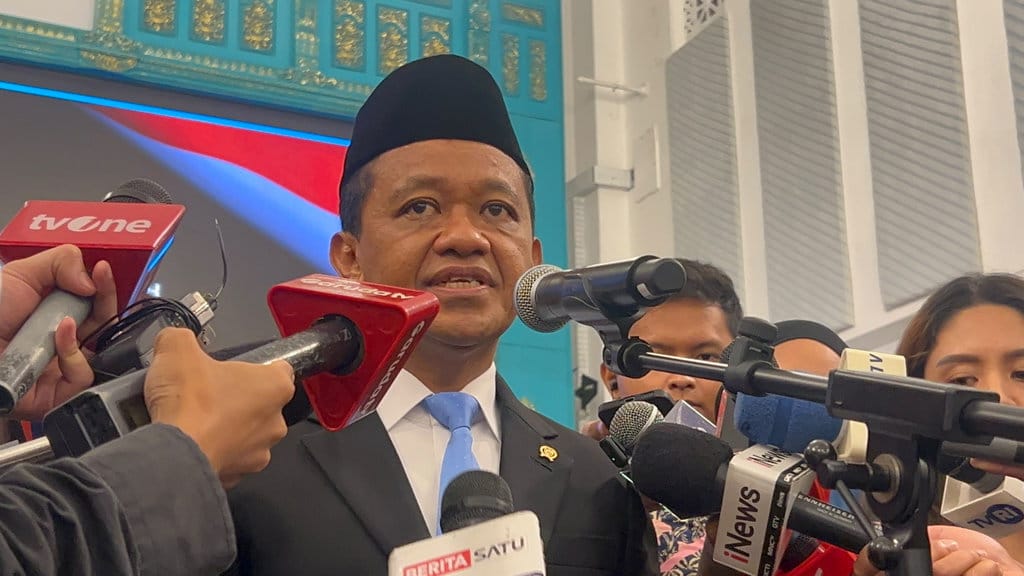
Formasi pemerintahan yangodisruptif brings new coordinates to energy and mineral governance. Schemes restructuring ministries at the end of October 2025 placed energy and mineral resources under a coordinating structure rather than a standalone ministry run by one person. Bahlil Lahdal, who previously led the Energy and Mineral Resources Ministry, now heads the Energy and Mineral Resources Coordinating Ministry (Kemenko ESDM). The move shifts the nature of the job: from managing a single portfolio to reconciling multiple agencies, budgets, and political interests that all depend on the same industrial chain.
The stakes are substantial. The energy downstreaming agenda has been Indonesia's most prominent economic policy of the past decade, and the energy transition commitment has become a binding national pledge carried into law. Both agendas advanced rapidly under the previous arrangement. Both now require execution across institutional boundaries that were previously handled separately.
Koordinasi, Bukan Penggabungan
The coordination model introduced in the latest cabinet lineup groups several fields under one coordinating ministry. In the energy and minerals cluster, the coordinating office sits alongside the Energy and Mineral Resources Ministry, the Industry Ministry, and the Environment and Forestry Ministry, among others. Field authority and budget authority remain with the respective line ministries, while the coordinating ministry is tasked with resolving overlaps, aligning work programs, and preventing contradictory regulations.
On paper this arrangement offers one advantage: a single point of entry for investors and industrial actors who previously had to navigate competing mandates between ministries. Sectors such as nickel, bauxite, copper, and iron ore touch trade rules, environmental approvals, forestry permits, energy allocation, and industrial zoning in one production chain. When those decisions are made in different rooms, timelines diverge and projects stall.
The risk lies in the opposite direction. A coordinating layer can also produce an additional administrative stage, unless it is given clear authority to arbitrate disputes and a mandate to enforce deadlines.
Beban Hilirisasi yang Belum Tuntas
Data on nickel processing capacity shows how far the downstreaming drive has come. A large number of integrated smelters and refining facilities have been built or are under construction, and domestic ore consumption obligations have tightened through trade regulations that gradually close the door on raw mineral exports. Bauxite and alumina, and copper concentrate, face similar discussions. The legal framework for restricting raw exports is in place; the transition period for companies that have not yet built processing capacity is what remains contested.
Several structural challenges persist. Ore supply concentration means a small number of holders control upstream volume, while smelter capacity expansion has outpaced the readiness of supporting infrastructure, including port facilities, electricity reliability in industrial estates, and waste management for slag and other by-products. The allocation scheme for production quotas has also been a recurring friction point, because regional employment commitments and corporate capacity rarely match in the same proportions.
Transisi Energi: Komitmen Besar, Eksekusi Terpisah
On the transition side, the official target framework rests on several pillars: a higher share of renewable generation in the national electricity mix under the long-term electricity supply and demand plan, energy efficiency measures, greenhouse gas reduction obligations for emitters, and a long-term net-zero pathway described in national planning documents. Industrial emissions capture, green hydrogen and green ammonia development, and sustainable biofuel schemes are being positioned as the bridge between current fossil-based production and the declared end state.
Implementation runs into sectoral realities. Power generation and transmission remain regulated by state-owned enterprises, while industrial conversion depends on private capital whose investment decisions follow price signals and policy certainty over multiple decades. The green ammonia and hydrogen projects announced in recent years have largely remained in pilot or pre-construction phases, awaiting offtake agreements and long-term pricing mechanisms.
Indikator yang Bisa Dipantau
Several indicators will show whether the coordination model works. The first is regulatory consistency: whether conflicting provisions between ministries are resolved rather than layered. The second is licensing turnaround for smelter and power projects, including environmental and spatial approvals. The third is whether the share of renewable energy in the supply mix moves in line with the electricity plan, and whether emissions capture projects reach operation rather than remaining in documentation.
A fourth indicator is follow-through on the raw export restrictions. Restrictions that are announced but not accompanied by clarity on capacity and infrastructure tend to invite legal disputes and uncertainty in investment plans. The transition from policy announcement to enforceability remains the decisive variable.
Satu Pintu, Banyak Kebutuhan
The new coordinating structure will be judged by a simple measure: whether projects that previously moved between agencies now advance under one timeline. Aggregation of authority does not automatically reduce risk. It shifts responsibility for outcomes upward, where cross-sector trade-offs must be settled rather than deferred.
For the downstreaming and transition agendas, the immediate question is not whether the direction changes. That direction has been set across successive cabinets and reaffirmed in law. The question is whether the coordination arrangement introduces enough decisiveness to convert targets into production capacity, and enough coherence for industry to plan investments over the next decade.








:strip_icc():format(webp)/kly-media-production/medias/8263843/original/065734300_1782021578-Tugas__38_.jpg)


Comments (0)