 sinta-pradana
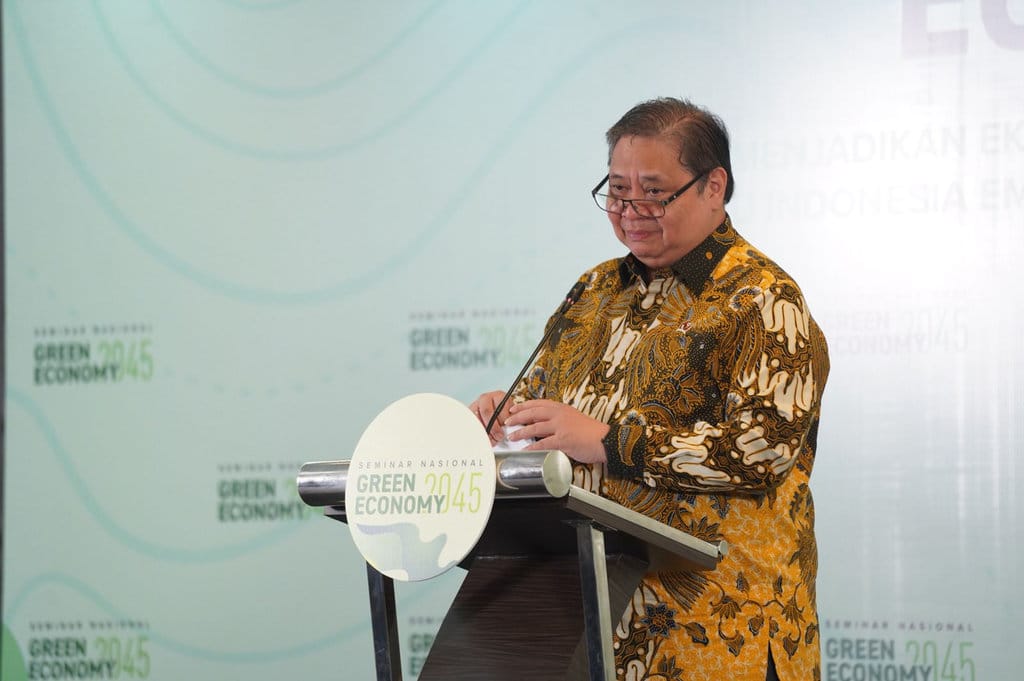
Government's signals for the domestic metal sector have shifted into a more assertive register. The coordinate minister directing economic affairs has openly laid out the scale of obstacles facing Indonesian steel in major Western destination markets, pointing to levy levels that in several cases reach half of the product's value. Behind the blunt framing sits a straightforward demand: that trading partners treat locally produced steel on equal terms with their own, rather than closing their borders to Indonesian supply.
Besarannya Disebut Langsung di Depan Publik
The claim was articulated in plain terms, without hedging or diplomatic cushioning. Steel originating from Indonesia, according to the government's account, is being charged duties of up to 50 percent across three large economies: the United States, the European Union, and the United Kingdom. That figure, if applied to ordinary commercial transactions, would effectively place Indonesian mills outside competitive reach in those markets, since the cost differential would exceed anything a producer could absorb through efficiency gains.
The three jurisdictions named are not random selections. Together they represent the traditional outlets for Indonesian long products, flat products, and pipe exports, and they are also the markets where Indonesian material has historically built distribution networks and downstream processing relationships. Losing price competitiveness there does not merely trim export volumes; it redirects the surplus back into the domestic market, where the industry is already described as oversupplied.
Instrument yang Digunakan Berbeda-Beda
Verification of how such barriers are constructed shows that no single mechanism explains the 50 percent figure. Washington relies on the national security tariff pathway first invoked against steel imports in 2018, a25 percent rate that was doubled in 2022 and later adjusted upward and downward through successive executive decisions. Brussels operates a mixed system: a quota-based safeguard regime first installed in 2018 and subsequently extended, carrying an out-of-quota penalty above 40 percent, layered with a carbon-related surcharge on imported metal and a series of trade remedy investigations. London inherited a similar structure after leaving the European Union, retaining a tariff-rate quota and applying a penalty rate beyond it.
On top of those, individual cases add further weight. A large number of separate proceedings have opened against Indonesian material in recent years, covering hot-rolled and cold-rolled coil, flat and long products, and inputs such as wire rod. Several of those have already concluded with definitive duties, including one mid-2010s anti-dumping ruling on Indonesian hot-rolled coil that set a rate in the mid-teens and was later extended. The cumulative effect, when quota penalties, carbon surcharges, and case-specific duties are stacked on a single shipment, produces a range of taxation wide enough that a 50 percent ceiling is defensible in some combinations.
Dampak di Dalam Negeri
Industry data indicate that the pressure is already registering at home. Export shipments of Indonesian steel, after years of steady growth toward the twenty-million-tonne range, contracted sharply in 2024, and the decline has continued through the following period. Producers have responded by curbing output and shutting down furnaces, a pattern that industry associations have attributed to a combination of cheap inbound material, narrowed export outlets, and shrinking domestic demand from construction and manufacturing.
That sequence is what turns an external trade issue into a domestic employment and investment question. The government frames the argument around fairness — the level playing field — and around the principle that a developing manufacturing base should not be structurally penalised for entering markets where incumbent producers enjoy decades of accumulated protection and subsidised capacity.
Jalur Negosiasi dan Risikonya
The immediate expectation is that officials will pursue the matter through consultation with the three governments concerned, seeking quota relief, a review of the safeguard thresholds, or case-by-case reconsideration of penalty rates. The obstacle is structural. Tariff and remedy measures of this type, once adopted, tend to survive political transition; some carry sunset clauses, but extensions have been the norm rather than the exception.
At the same time, the 50 percent figure should be read as the upper bound of a worst-case stack rather than a universal rate applied uniformly to every product and shipment. Distinguishing between headline penalties and actual duty paid on a given line item matters, and it is the kind of distinction that rarely survives headline treatment.
For now, the government's position remains that the imbalance must be corrected before any meaningful expansion of steel exports can be expected. Whether that conversation yields measurable relief will depend on how much negotiating capital Jakarta is willing to commit — and on how quickly surplus capacity at home finds alternative buyers.


:strip_icc():format(webp)/kly-media-production/medias/5571401/original/013579500_1777619034-WhatsApp_Image_2026-05-01_at_12.32.20.jpeg)

:strip_icc():format(webp)/kly-media-production/medias/9359880/original/077733700_1790582075-Cek_fakta_-_Romo_Koko_.jpg)
:strip_icc():format(webp)/kly-media-production/medias/9323344/original/002227100_1786610027-WhatsApp_Image_2026-08-12_at_18.13.59.jpeg)
:strip_icc():format(webp)/kly-media-production/medias/9325877/original/073968400_1786944577-WhatsApp_Image_2026-08-15_at_10.01.52.jpeg)
:strip_icc():format(webp)/kly-media-production/medias/9292785/original/068110200_1783657736-Cek_Fakta_Tidak_Benar_Ini_Link_Pendaftaran_-_2026-07-10T112807.834.jpg)



:strip_icc():format(webp)/kly-media-production/medias/8263843/original/065734300_1782021578-Tugas__38_.jpg)


Comments (0)